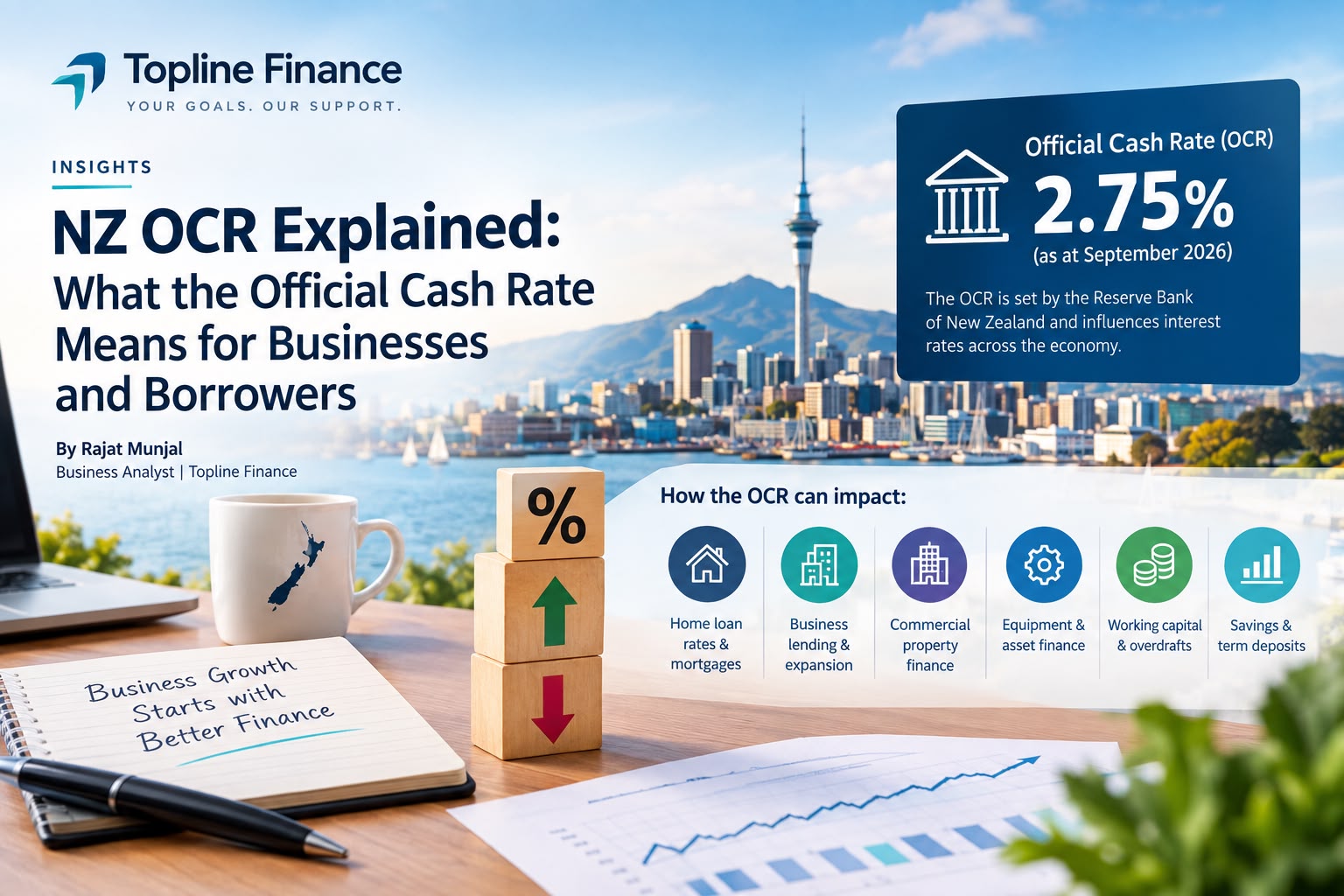


How Spending Habits Are Shaping the Finance Market
By Rajat Munjal, Business Analyst | Topline Finance
New Zealand consumers are changing the way they spend, save and borrow.
Higher household costs, changing employment conditions, property-market uncertainty and evolving consumer confidence are influencing how New Zealanders approach major financial decisions.
For lenders and borrowers alike, understanding these changing consumer behaviours is becoming increasingly important.
The question is no longer simply “How much can I borrow?”
It is also:
“What level of borrowing makes sense for my financial position today and in the future?”
A MORE CAUTIOUS NZ CONSUMER
Household spending has remained relatively subdued, with the Reserve Bank of New Zealand reporting that annual household consumption growth was only 0.8% in the year to the March 2026 quarter.
Weak real income growth, reduced household wealth, softer labour-market conditions and increased saving have all contributed to more cautious consumer behaviour. (Reserve Bank of New Zealand)
This cautious approach can be seen in everyday financial decisions.
Consumers may be:
- Delaying major purchases
- Comparing finance options more carefully
- Increasing savings
- Reducing discretionary spending
- Reviewing existing debt
- Refinancing or restructuring loans
- Waiting longer before purchasing property
WHAT IS CHANGING CONSUMER BEHAVIOUR?
Several factors are influencing the way New Zealand households make financial decisions.
- THE COST OF EVERYDAY LIVING
Food, fuel, insurance, utilities and other household expenses can have a significant impact on disposable income.
When essential costs increase, households may have less surplus cash flow available for new borrowing or discretionary purchases.
- EMPLOYMENT AND INCOME
Employment confidence plays an important role in financial decision-making.
When households are uncertain about future income, they may become more conservative with borrowing and spending.
The RBNZ’s September 2026 assessment noted that labour-market conditions remain an important factor in the outlook for household consumption. (Reserve Bank of New Zealand)
- PROPERTY MARKET CONFIDENCE
Property remains one of the largest components of household wealth in New Zealand.
Changes in property values can affect available equity, refinancing decisions and consumer confidence.
The RBNZ has reported that national house prices have remained broadly flat over recent years, with housing-market conditions continuing to influence household wealth and spending. (Reserve Bank of New Zealand)
- CONSUMER CONFIDENCE
Consumer confidence can directly influence whether households feel comfortable making significant purchases.
The ANZ-Roy Morgan Consumer Confidence Index was 98.0 in August 2026, although it remained below the long-term neutral level. The proportion of households considering it a good time to purchase a major household item also remained subdued. (ANZ Bank)
This suggests that many consumers continue to approach larger financial commitments carefully.
HOW IS THIS AFFECTING BORROWING?
Changing consumer behaviour is also influencing the finance market.
A consumer considering a mortgage, vehicle, investment property or other lending may now spend more time assessing:
Affordability → Cash flow → Loan structure → Future commitments → Financial resilience
This is a positive development.
Responsible borrowing is not simply about securing the maximum amount available.
It is about finding a lending structure that remains manageable within the borrower’s overall financial position.
THE NEW PRIORITY: CASH FLOW
Cash flow has become increasingly important for consumers.
Two households with identical incomes may have very different borrowing capacity because their expenses, existing debts and financial commitments can vary significantly.
Before applying for finance, consumers should understand:
- Monthly household income
- Mortgage or rent
- Personal loans
- Credit cards
- Vehicle finance
- Insurance
- Utilities
- Food and transport costs
- Childcare and education expenses
- Other regular commitments
- Available savings or emergency funds
A clear understanding of cash flow can help borrowers make better-informed finance decisions.
CONSUMERS ARE BECOMING MORE FINANCE-SAVVY
Another important change is the way consumers research financial products.
Borrowers now have greater access to information and can compare:
- Interest rates
- Fixed and floating options
- Loan terms
- Fees
- Cashback offers
- Refinancing options
- Lender requirements
- Repayment structures
This means consumers are increasingly looking beyond the headline interest rate.
A slightly lower rate may not necessarily represent the best overall solution if the loan structure, fees, flexibility or repayment requirements are unsuitable.
SHOULD CONSUMERS DELAY BORROWING?
Not necessarily.
Market uncertainty does not automatically mean that consumers should postpone every financial decision.
The right approach depends on the individual’s circumstances.
For example, a first-home buyer may have a strong deposit, stable income and manageable expenses.
Another borrower may already have significant debt and limited monthly surplus.
Both consumers are facing the same market — but their appropriate financial decisions could be very different.
The key question is:
Can the borrowing remain affordable if circumstances change?
That is often more important than trying to predict exactly where the market will be six or twelve months from now.
WHAT SHOULD BORROWERS DO BEFORE APPLYING?
REVIEW YOUR FINANCIAL POSITION
Understand your income, expenses, assets and liabilities.
KNOW YOUR EXISTING COMMITMENTS
Review all current loans, credit cards and other financial commitments.
CHECK YOUR EQUITY
For property owners, understanding current property value and available equity can help when considering refinancing or additional lending.
PLAN FOR CHANGE
Consider what would happen if household expenses increased or income changed.
COMPARE THE FULL LOAN STRUCTURE
Look beyond the advertised interest rate and consider the overall cost and flexibility of the finance.
PREPARE YOUR DOCUMENTATION
Having clear and up-to-date financial information can make the lending process more efficient.
WHAT DOES THIS MEAN FOR THE NZ FINANCE MARKET?
The changing behaviour of consumers is creating a finance market where quality, affordability and clarity matter more than ever.
Banks and other lenders continue to assess the ability of borrowers to service their commitments.
At the same time, consumers are becoming more careful about taking on new debt.
The result is a market where a well-prepared application can be particularly valuable.
FROM “HOW MUCH CAN I BORROW?” TO “WHAT CAN I COMFORTABLY AFFORD?”
This shift in thinking can make a meaningful difference.
A strong finance decision should consider:
Income
↓
Expenses
↓
Existing commitments
↓
Available equity/deposit
↓
Proposed borrowing
↓
Future affordability
↓
Suitable finance structure
This provides a more complete picture of a borrower’s financial position.
HOW TOPLINE FINANCE CAN HELP
At Topline Finance, we understand that every borrower has a different financial situation.
Whether you are considering:
- Home lending
- Refinancing
- Investment property finance
- Personal finance
- Debt restructuring
- Commercial finance
- Other lending solutions
our focus is on understanding your circumstances and helping you explore suitable finance options.
A changing market does not have to mean delaying every financial decision.
It means making those decisions with better information, realistic expectations and appropriate financial planning.
FINAL THOUGHTS
The New Zealand consumer is becoming more cautious, informed and focused on affordability.
Changing household costs, employment conditions, property values and confidence are influencing how people spend and borrow.
For consumers, the most important step is not trying to predict every market movement.
It is understanding your own financial position and making borrowing decisions that remain sustainable.
In a changing market, being finance-ready matters.